
Understanding the Mechanics of the Game Behind Cash or Crash Live

The game cash or crash live min deposit or Crash Live carves its own space in the world of live game shows. Its appeal is found in a powerful blend of visual spectacle and game mechanics that turns every round into a personal test of nerve. This is no just a spin of a roulette wheel. In this game, you take the driver’s seat, making active choices that determine your winnings. The idea captivates you with a rising multiplier, then challenges you to take it before a hidden “crash” clears the board. To get the most out of the game, you need to look past the lights and see how it actually works. Let’s examine the rounds, the host’s function, the odds involved, and how players can practically navigate the thrills.
The function of the presenter and RNG
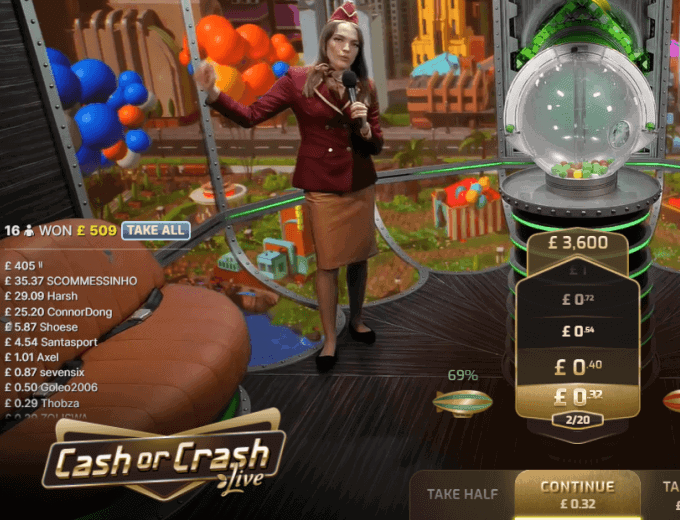
The live host is more than just talk. They determine the game’s emotional pace. While they can’t affect the result, they masterfully build suspense. They call out the climbing multiplier and offer live updates on what percentage of the crowd is cashing out at each level. That social cue can play tricks on your head. But remember, the host operates independently of the game’s engine: the Random Number Generator (RNG). The crash point for each stage is established by a certified RNG the instant the stage begins. This ensures fairness and total unpredictability. The host has no clue when the crash will happen. Their job is entertainment. The RNG’s job is certifiable fairness. This combination combines transparent live action with provably random results.
Theoretical Basics and Variance
Let’s examine the numbers that drive the game. The crash point for every round is based on a defined probability distribution. Frequent, small multipliers such as 1.2x or 1.5x have a high probability of being chosen. Sky-high multipliers can occur, but they are exponentially less likely. This design ensures the game fair. The common, minor crashes fund the occasional, large potential wins. The RTP figure is a theoretical percentage spanning millions of games. In a single gaming session, the variance are wild. You’re not wagering against the house in a conventional sense. You’re acting against a concealed, random value. Remember these points:
- Separate Rounds: Every round’s crash point is an independent occurrence. A crash of 1.2x in round one gives no info about round two.
- No Forecasting Ability: The RNG eliminates any predictable patterns. Historical crashes or big wins do not influence what comes next.
- House Advantage: The game is designed with an inherent house edge, which is shown in the publicly disclosed RTP from the provider.
The Core Objective and Basic Flow
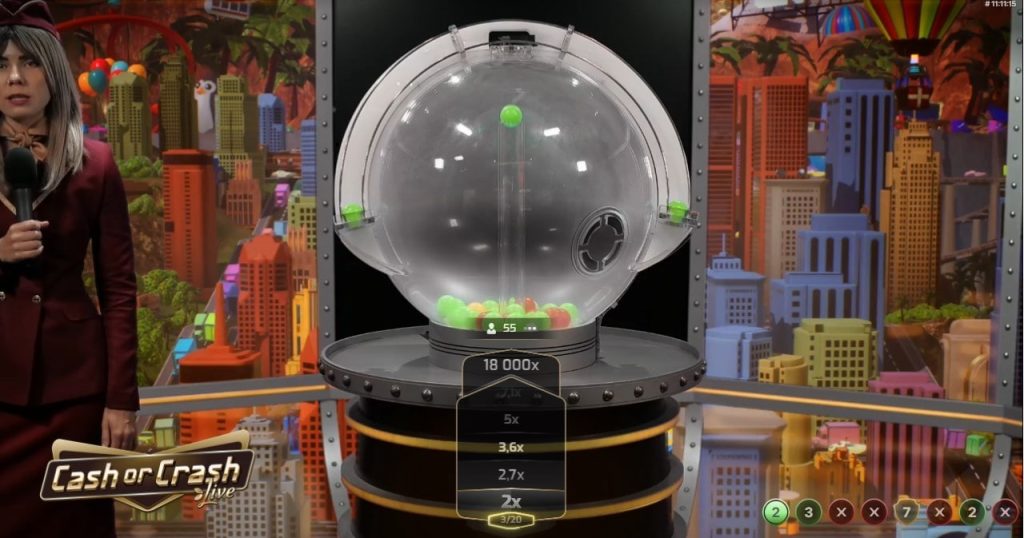
The aim of Cash or Crash Live is straightforward on the surface. You have to determine when to withdraw a rising multiplier before a hidden “crash point” concludes the turn and removes your winnings for that phase. All game commences with players placing bets. A rocket then launches its journey, and a multiplier begins climbing from 1x. The journey has various phases. Prior to launch, a unknown crash multiplier is determined for each stage, concealed from nobody. As the value climbs, every player opts to hit “Cash Out,” securing that multiplier on their wager, or to remain. If the rocket reaches the unknown crash point before a player cashes out, they surrender their wager for that phase. The cycle of hazard and profit happens over multiple rounds. Surviving players grow their winnings gradually.
Dissecting the Game Stages
Think of the game as a series of different segments, each a fresh risk. Avoiding a crash doesn’t remove you from the game. You move to the subsequent stage with your accumulated winnings safe, then commence the gambling process all over again on the next leg of the rocket’s journey. This structure is everything. It builds a drama, with pressure that intensifies as you go. The presenter heightens the tension, announcing how many players are still aboard the rocket as the multiplier reaches frightening levels. Initial phases often involve safe plays. Advanced rounds, with their high-stakes multipliers, lure you to bet the profit you’ve already banked. This structure is the essence of the game’s drama. It forces a sequence of independent, critical decisions instead of a single one.
From Safe to Dangerous: The Risk Escalation
Observe the colored trajectory the rocket takes. It’s a core part of the game’s language. The first part is typically a “Green Zone,” a lower-risk phase where a crash is still possible. Then, the rocket could reach an “Amber Zone,” a obvious indication that hazard is growing. The final stretch is the “Red Zone.” Here, multipliers appear their best, but the likelihood of a crash is statistically at its peak. These colors are not just decoration. They offer a visual shorthand for the risk level at any moment. They make an theoretical probability feel tangible. Realizing the game is intentionally alerting you about increasing volatility is a essential piece of strategic information.
Tactical Approaches and Gambler Mindset
No tactic can defeat the fundamental randomness. But you can apply structured methods to handle your money and your feelings. The key trade-off is a trade-off. Do you lock in fixed returns, or shoot for massive gains? Players often employ strategies like the “Fixed Cash-Out.” With this approach, you choose ahead of time to withdraw at a specific multiplier, say 2x, in every round. This aims for steady, small gains. The reverse is the “Let It Ride” style, where you risk several rounds for a chance at a huge reward, acknowledging that failures will take place. A more strategic tactic is the “Percentage Bankroll” method, where you change your stake based on your current winnings. The key aspect, though, is in your head. Can you fight the “greed factor” when the multiplier rises? Can you prevent frustration after an premature loss? Your greatest asset is creating firm guidelines for yourself before the rocket even begins.
Common Pitfalls to Evade
Be wary of a few typical blunders. The most harmful is “chasing” a failure. This involves rashly increasing your bet after a setback, which violates the process’s phase-independent structure. Another mistake is believing in the “hot hand” illusion, assuming a sequence of big payouts is probable to continue. Letting the host’s talk or the actions of other players pull you away from your own predetermined strategy is widespread. Also, don’t misread the sections. The Amber and Red Zones aren’t challenges to beat. They are signals that the hazard has spiked. Entering any phase without a clear goal converts the activity from a session of decisions into a complete emotional journey. That experience rarely ends well.
Finale: A Blend of Fortune and Decision
Cash or Crash Live is a fascinating mix of pure chance and deliberate decision. Its workings are built to craft a tale of escalating tension, driven by a transparent RNG and livened by a engaging emcee. Determining victory as a entertaining and potentially rewarding round relies on several factors. It’s less concerned with anticipating the unpredictable and instead about comprehending how the game is designed. It demands handling your money with restraint and curbing the psychological impulses the game expertly triggers. By learning its stages, understanding its numeric foundation, and following a individual strategy, you can transform your perspective. You move from puzzled speculation to informed engagement in a remarkably thrilling live game show.


